




Byron Bay Wildlife Guide: Whales, Dolphins, Turtles and More

The Byron Bay area is one of the best places on the NSW coast to see wildlife in its natural setting. Humpback whales pass from May to November, dolphins and turtles live in the local waters, and the hinterland rainforest protects habitat for threatened species.
Spring is a particularly good time to visit, with whales still on the move and wildflowers along the coast. Here’s where to look, starting right beside the park.
When is the best time to see wildlife in Byron Bay?
There’s wildlife to look for on any visit, but some animals are easier to find at certain times.
| Animal | When to look | Where to start |
|---|---|---|
| Humpback whales | May to November | Cape Byron, Three Sisters lookout |
| Bottlenose dolphins | No set season, as a resident pod lives here | Wategos, Little Wategos |
| Turtles | Ask your tour operator what’s being seen | Julian Rocks |
| Leopard sharks | Summer into autumn | Julian Rocks |
| Grey nurse sharks | Winter | Julian Rocks, on a dive |
| Sea eagles | No set season, so keep watching | Broken Head Nature Reserve |
| Koalas | No set season, and they’re hard to spot | A guided tour |
Wild animals follow their own timetable, so treat this as a guide rather than a promise.
What wildlife can you see at Broken Head?
Broken Head Nature Reserve is right on our doorstep. On the Three Sisters Walking Track, keep watch for white-bellied sea eagles diving into the water for food. In spring, you may also see wildflowers such as purple coral pea. Please stay on the track and leave plants and animals as you find them.
During whale season, you can also look for whales from Broken Head beach. It’s one of the easiest ways to start, as you only need binoculars and a little patience.
Where can you see whales in Byron Bay?

Whales migrate past Byron Bay from May to November. Numbers along the NSW coast usually peak around late June and July as they head north, and from around mid-August they begin heading south again, some with calves. There are excellent places to watch from land:
- Cape Byron Lighthouse: a must-do on any Byron Bay holiday, and National Parks calls it a brilliant location for whale watching
- Cape Byron walking track: a 3.7km loop with coastal views, where you may also see dolphins and turtles in the water below
- Three Sisters lookout: close to the park, with a raised view of the ocean
Sightings can never be guaranteed from land, so take your binoculars and be patient. Look for a spout of mist, a splash or a dark shape breaking the surface.
If you’d like to get closer, several operators run boat tours during the season:
- Byron Bay Whale Watching: three-hour tours from Byron Bay, with a small group of eight and a marine scientist guide
- Sundive: trips with around two hours on the water
- Blue Bay Whale Watching: trips from Brunswick Heads Boat Harbour between mid-June and October
Check each operator’s dates, conditions and sighting policy before you book. Read more in our whale watching guide.
If you see a whale in trouble, such as one tangled in fishing gear, report it to National Parks on 13000 PARKS.
Where can you see dolphins in Byron Bay?

Bottlenose dolphins are often seen around Byron Bay. Try the vantage points around Wategos and Little Wategos beaches, or look down from the Cape Byron walking track.
For a closer experience, you can join a sea kayak tour in the marine park:
- Go Sea Kayak Byron Bay: tours of around two hours, with children as young as five welcome. If you don’t see a dolphin, turtle or whale, the company says you can paddle again for free.
- Cape Byron Kayaks: tours of around two and a half hours. The company says it sees dolphins on more than 90% of its tours.
Where can you see turtles and sea life?

Snorkelling or diving at Julian Rocks Nguthungulli Nature Reserve is one of the best ways to see marine life. The NSW Department of Primary Industries says significant numbers of green, loggerhead and hawksbill turtles are found there, with green turtles the most common. PADI says the rocks support more than 1,000 marine species, including over 500 species of fish, thanks to the mix of warm and cool waters.
You’ll need to join a tour or take a boat out to the rocks. These local operators can help you plan your trip:
- Sundive: snorkelling and dive trips of about three hours from check-in to return, plus Try Scuba for people with no experience
- Byron Bay Dive Centre: dive trips, turtle snorkel tours and a Turtle School workshop that includes snorkelling
Julian Rocks is a sanctuary zone, so take only photos, and keep your distance from turtles and other animals.
Where can you see koalas near Byron Bay?

Koalas live in the Byron Bay area, but they can be very hard to spot, and the population faces threats including habitat loss. Projects such as Koala Connections have worked to restore and reconnect koala habitat on the far north coast.
A guided tour gives you the best chance of finding one. Vision Walks lists a Koala Tour of about three and a half hours, suitable for ages five and up.
If you’re lucky enough to see one in the wild, keep your distance. Driving slowly through koala country helps to keep them safe too. If you find a sick or injured koala, call Friends of the Koala on (02) 6622 1233.
What other animals can you see?

Nightcap National Park’s rainforest is part of the Gondwana Rainforests of Australia World Heritage Area, and it’s a wonderful place to look for wildlife:
- Minyon Grass picnic area: look up for peregrine falcons, and look down for brush turkeys and Albert’s lyrebirds on the forest floor.
- The rainforest: the park protects habitat for several threatened species.
- Protesters Falls: on this 1.4km return walk, look and listen for rose-crowned fruit doves, barred cuckoo-shrikes and pademelons. This is also home to the endangered Fleay’s barred frog, so swimming isn’t permitted in the creeks beside the track, and National Parks asks walkers to avoid the creek beds.
Tracks can close after heavy rain, so check the National Parks alerts before you go.
Birds at Belongil Creek
Closer to town, the Belongil estuary is a good place for birdwatching. Byron Bird Buddies lists ospreys, brahminy kites, terns, egrets, cormorants, rainbow bee-eaters and sacred kingfishers among the birds found there.
Guided wildlife tours
Prefer a guide? Vision Walks lists several tours in the area, so check its website for current options and availability:
- Night Vision Walk: a four-hour rainforest walk for ages 10 and up, using night vision goggles to look for nocturnal animals
- Byron Bay Wildlife Safari: a seven-hour day tour for ages five and up, through forest, rainforest and grassland
- Platypus Walk: a four-hour tour for ages five and up, where the company says it sees platypus about 90% of the time
How to watch wildlife responsibly
- Keep your distance, and never feed wild animals.
- Stay on marked tracks.
- Take your rubbish with you.
- Follow signs and closures, which protect wildlife and visitors.
- If you find injured wildlife, call WIRES on 1300 094 737.
There’s so much to see around Byron Bay. Read more in our posts, Is Byron Bay the best place for whale watching and wildlife? and Byron Bay’s best spots for bird watching.
Byron Bay wildlife: quick answers
Where can you see whales in Byron Bay? Cape Byron Lighthouse, the Three Sisters lookout at Broken Head and Broken Head beach are all good places to watch for humpback whales from May to November.
Where can you see dolphins in Byron Bay? Bottlenose dolphins are often seen around Byron Bay. Try the vantage points around Wategos and Little Wategos beaches, or join a guided sea kayak tour.
Where can you see turtles near Byron Bay? Julian Rocks Nguthungulli Nature Reserve is one of the best places to see turtles. The NSW Department of Primary Industries says green turtles are the most common there.
How close can you get to whales in NSW? The NSW Government says boats and paddlecraft must stay at least 100m from whales, or 300m if there are calves.
Can you see koalas near Byron Bay? Koalas live in the Byron Bay area, but they’re hard to spot. A guided tour gives you the best chance. If you find a sick or injured koala, call Friends of the Koala on (02) 6622 1233.
Book your stay at Broken Head
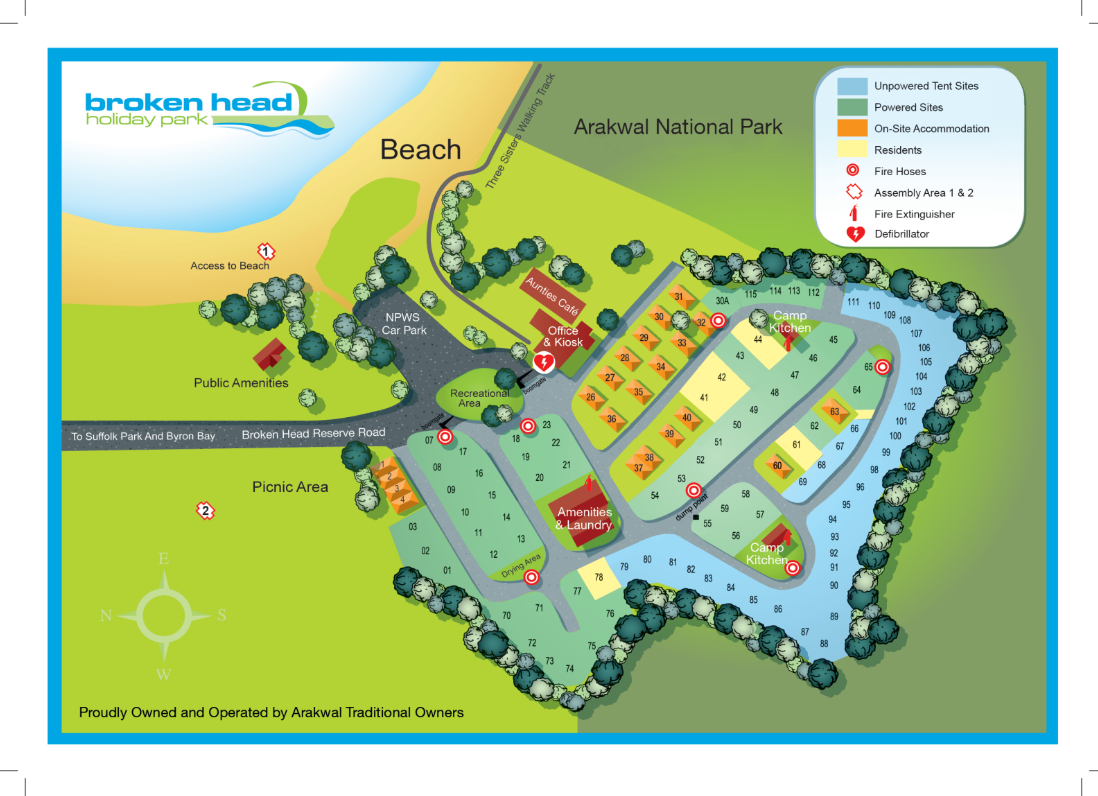
Stay in one of our campsites, beach cabins or Beach Shacks, surrounded by nature and close to the beach.
Check availability and book your cabin or Beach Shack, or call 02 6685 3245 to book a campsite.


This Post Has 0 Comments