





Cape Byron Lighthouse: Walk, Parking, Tours and Opening Hours

Cape Byron Lighthouse stands on the most easterly point of the Australian mainland, about 20 minutes’ drive from Broken Head Holiday Park. The lighthouse lawn is open from 8am to sunset, the Maritime Museum is open from 10am to 4pm daily, and parking beside the lighthouse costs $10 an hour, with a one-hour limit.
If you’d like more time, walk up on the 3.7km Cape Byron walking track instead. Here’s everything you need to know to plan your visit.
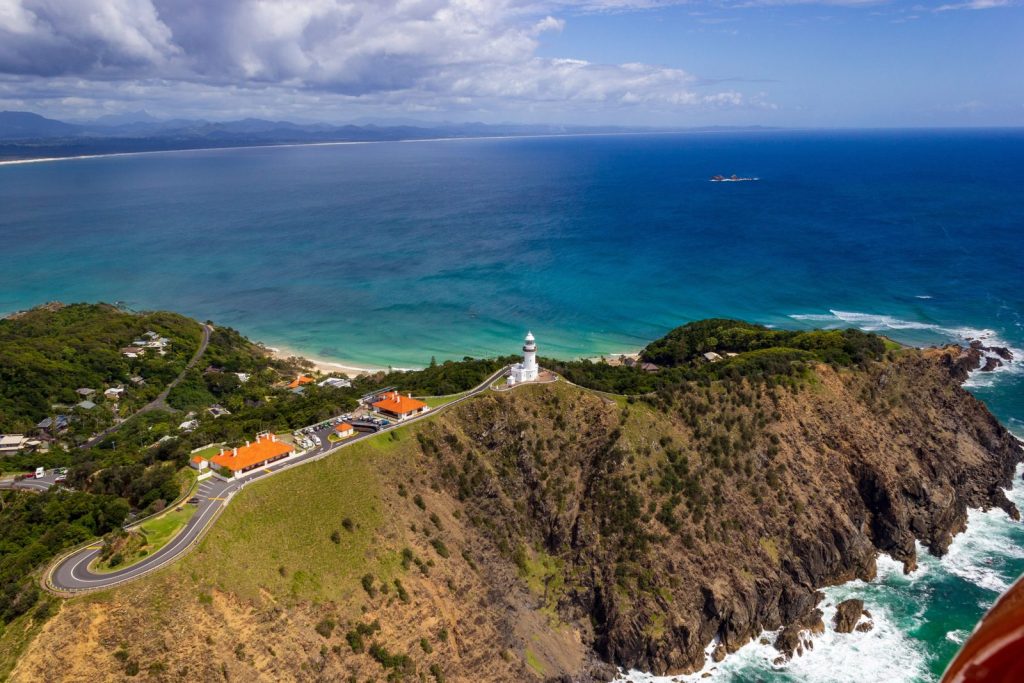
Cape Byron Lighthouse at a glance
- Location: 199 Lighthouse Road, Byron Bay, in Walgun Cape Byron State Conservation Area
- Lighthouse lawn: 8am to sunset
- Maritime Museum: 10am to 4pm daily
- Walgun Cape Byron Information Centre: 9.30am to 4.30pm daily, closed Christmas Day
- Parking at the lighthouse: $10 per vehicle per hour, with a maximum of one hour per vehicle each day
- Walking track: a 3.7km loop that takes one to three hours
- Pets: not permitted on the walking track
Opening hours and fees can change, so check the National Parks website before you go.
Why visit Cape Byron Lighthouse?
The lighthouse is one of Byron Bay’s best-known landmarks, and the headland around it has some of the most impressive views on the NSW coast. The light was first lit on 1 December 1901, and resident keepers ran it until 1989. It’s often described as Australia’s most powerful lighthouse.
Most people come for the views, though. From the headland, you can look out over the ocean, along the beaches and back to the hinterland. National Parks notes that turtles, dolphins and humpback whales are regularly seen from the point.

A short history of Cape Byron Lighthouse
Cape Byron Lighthouse was built in 1901 from prefabricated concrete blocks. Lighthouses of Australia says it was built under Charles Harding, the successor to colonial architect James Barnet.
The tower is 22 metres tall, but it stands so high on the headland that its light shines from about 118 metres above sea level. It can be seen up to 27 nautical miles out to sea. Resident keepers looked after the light until 1989, when it was automated. Today, the Australian Maritime Safety Authority operates the light, and the headland around it is managed as Walgun Cape Byron State Conservation Area.
If you’d like to learn more about the lighthouse and the ships it has guided, the Maritime Museum is the place to start.
How do you get to Cape Byron Lighthouse?
You can drive, walk or join a guided tour.
Driving to the lighthouse
From Broken Head Holiday Park, it’s about a 20-minute drive to the lighthouse. Drive through Byron Bay, then follow Lighthouse Road up the headland.
Parking beside the lighthouse is limited and paid. It costs $10 per vehicle per hour, and each vehicle can only stay for one hour a day. That limit also applies to annual pass holders. The car park can fill up on busy weekends, so arriving early gives you a better chance of finding a space.
Walking to the lighthouse
If you’d like more than an hour, walking up is the better option. The Walgun Cape Byron walking track is a 3.7km loop through rainforest, grassland, beaches and clifftops, and you can start at Captain Cook Lookout, The Pass, Wategos Beach or the lighthouse itself.
Parking at The Pass, Bawaii rest area and Cosy Corner costs $5 per vehicle per hour, and these spots don’t have the one-hour limit that applies at the lighthouse. Parking further down and walking up lets you take your time.
What is the Cape Byron walking track like?

The Cape Byron walking track is a Grade 3 track with short, steep hills and many steps. National Parks suggests allowing one to three hours, and says you’ll need a good two hours to properly enjoy it.
Along the way, you’ll pass:
- Bangalow palms and burrawangs: look for these in the rainforest sections
- The Easterly Point lookout: a popular stop for photos
- Wategos Beach and The Pass: both good places to stop for a break
- Open grassland: part of the headland’s mix of landscapes
Look down at the water as you walk. National Parks says you may see turtles, dolphins and stingrays, plus whales in season. You don’t have to walk the whole loop either, as the track can be accessed at several points and walked in shorter sections.
Prefer a running pace? Our Byron Bay trail running guide covers the loop too.
Can you see whales from Cape Byron Lighthouse?
Yes. National Parks calls Walgun Cape Byron a brilliant location for whale watching, and humpback whales pass this coast from May to November. Bring binoculars and allow plenty of time, as sightings are never guaranteed.
Read more about where to look in our guide to free whale watching, or see our Byron Bay wildlife guide for dolphins, turtles and more.

Can you see the sunrise from Cape Byron?
Yes, and watching the sun rise from the most easterly point of the mainland is a popular way to start the day. The park is open at all hours, but the lighthouse lawn opens at 8am, so it’s best to plan on walking up for sunrise. Take a torch for the walk in the dark, and stay well back from the cliff edges.
If you’d prefer a guide, Wander Byron runs guided sunrise walks to the lighthouse. The two-hour walk meets at The Pass car park an hour before dawn, and bookings are required.
Can you go inside Cape Byron Lighthouse?
Only on a guided tour. National Parks runs guided tours of the lighthouse and Maritime Museum on limited days and times. There’s also a private historic lighthouse tour, which is available on request from Monday to Friday and takes about 45 minutes. It costs from $250 for a group of up to 10 people, plus park entry fees, and includes a climb of about 70 narrow steps inside the tower. Children must be accompanied by an adult.
To ask about tours, call National Parks on 02 6639 8300.
The Maritime Museum
The Maritime Museum is open from 10am to 4pm daily. It’s a good stop if you’d like to learn more about the lighthouse and the ships it has guided along this coast.
Aboriginal cultural tours
Cape Byron is on Arakwal Country. To learn about the area from a local Aboriginal guide, National Parks lists a guided Aboriginal cultural tour with Explore Byron Bay. The 90-minute walk is led by Bundjalung woman Delta Kay and covers local history, bush foods and Bundjalung words. Contact the operator for prices and dates.
When is the best time of year to visit Cape Byron?
Cape Byron is worth visiting at any time of year, but each season is a little different:
- Summer: it’s often hot and busy, so start early, carry plenty of water and expect the car parks to fill quickly during the school holidays.
- Autumn: milder days make the walking track more comfortable, and whale season begins in May.
- Winter: cool, clear mornings are ideal for walking, and humpback whales pass the coast.
- Spring: whales are still heading south until November, and the weather starts to warm up again.
Whatever the season, early mornings are usually the quietest time to visit.
A half-day plan from Broken Head
If you’re staying with us, here’s an easy way to see the best of Cape Byron in a morning:
- Leave early: drive about 20 minutes to The Pass, where parking costs $5 an hour.
- Walk the loop: follow the track through the rainforest and past Wategos Beach up to the lighthouse, stopping at the lookouts along the way.
- Visit the museum: time your walk to reach the lighthouse after the Maritime Museum opens at 10am.
- Finish the loop: continue past Captain Cook Lookout and back down to The Pass.
- Have lunch in town: Byron Bay’s cafés are only a few minutes away.
- Head back to the beach: spend the afternoon at Broken Head.
Visiting Cape Byron with kids
Cape Byron is a great outing for families, with a little planning. The boardwalk from Captain Cook Lookout to Brooke Drive is accessible for prams, but most of the loop has steep hills and many steps, so little legs may need a carry. You can also walk shorter sections of the track rather than the full loop.
Keep children close near cliff edges and lookouts, and stay on the marked track. Turning the walk into a whale and dolphin spotting game helps keep everyone going, and the Maritime Museum is a good stop for curious kids.
Is there a café at the lighthouse?
The Cape Byron Lighthouse Café has been closed until further notice, so check the National Parks website before you go. Either way, bring water, especially if you’re walking up. You’ll find plenty of cafés in Byron Bay, and The Pass Café is near the walking track.
Is Cape Byron Lighthouse accessible?
National Parks lists no wheelchair access at the lighthouse precinct. Visitors with a disability can arrange early access before 8am by contacting National Parks in advance.
On the walking track, the boardwalk from Captain Cook Lookout to Brooke Drive is accessible for prams and wheelchairs. Most of the rest of the track is steep, with many steps.
What should you bring?
- Drinking water
- A hat and sunscreen
- Comfortable walking shoes
- Binoculars, particularly from May to November
- A torch, if you’re going up for sunrise
- Your phone, with the Emergency Plus app installed, as mobile reception can be limited
Tips for visiting Cape Byron Lighthouse
- Go early: mornings are cooler, and parking is easier to find.
- Stay on the track: keep well back from cliff edges.
- Leave the drone at home: recreational drones are prohibited in the park.
- Check the beaches: beaches along the track may not be patrolled and can have strong rips, so check before you swim.
- Check for closures: the park can close during poor weather or high fire danger.
Cape Byron Lighthouse: quick answers
How long do you need at Cape Byron Lighthouse? Allow at least an hour to see the lighthouse and lookouts, or two to three hours if you’d like to walk the 3.7km Cape Byron walking track.
Is Cape Byron Lighthouse free to visit? Entry on foot is free. If you drive, parking beside the lighthouse costs $10 per vehicle per hour, with a one-hour limit each day.
Can you drive up to Cape Byron Lighthouse? Yes. Lighthouse Road leads up the headland to a small paid car park beside the lighthouse lawn, which is open from 8am to sunset.
Can you take a dog to Cape Byron Lighthouse? No. Pets aren’t permitted on the Cape Byron walking track, apart from certified assistance animals.
How far is Cape Byron Lighthouse from Broken Head Holiday Park? It’s about a 20-minute drive from the park, which is at 184 Broken Head Reserve Road, Broken Head.
Stay close to Cape Byron at Broken Head
Broken Head Holiday Park is about 20 minutes from the lighthouse, so it’s easy to head up for an early walk and be back on the beach by lunchtime. Closer to home, the Three Sisters Walking Track offers more ocean views and a quieter place to look for whales.
Check availability and book your cabin or Beach Shack, call us on 02 6685 3245 to book a campsite, or explore our accommodation options.


This Post Has 0 Comments