





Byron Bay Sunrise: The Best Spots to Watch the Sun Come Up

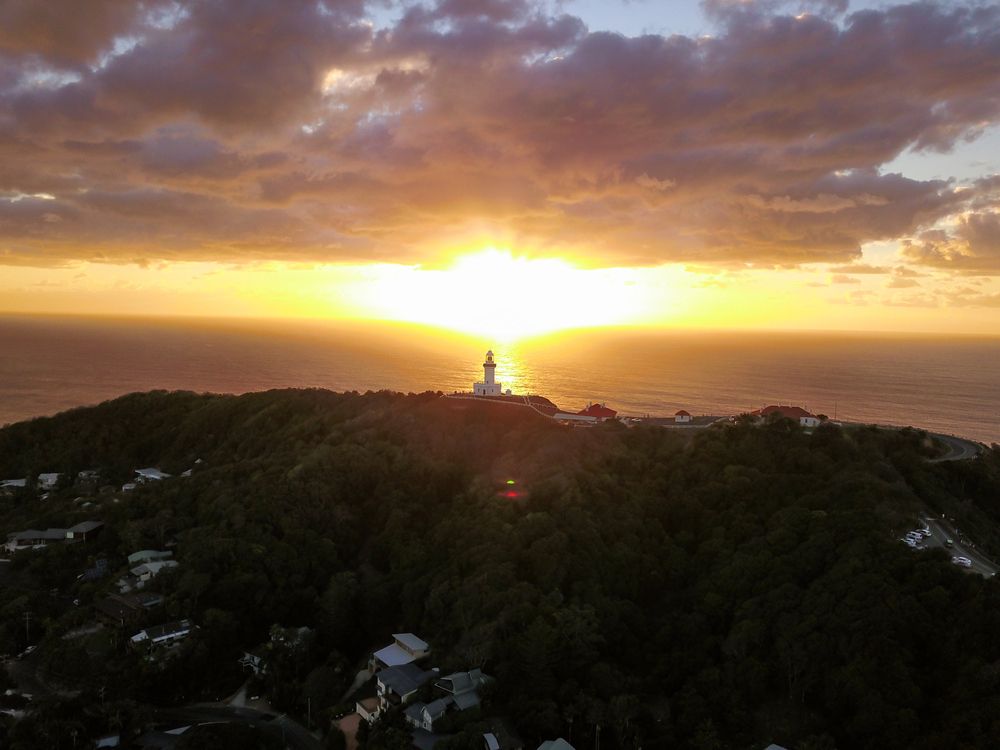
The best places to watch the Byron Bay sunrise are Broken Head Beach, the Three Sisters lookout in Broken Head Nature Reserve, Tallow Beach, the Most Easterly Point at Cape Byron, and Wategos or Main Beach. The Cape Byron Lighthouse gate stays closed until 8am, so walk up from The Pass. Sunrise ranges from about 5:40am in December to after 6:30am in winter.
This guide starts at our front gate and works north. It covers sunrise times by month, getting there safely in the dark, parking, whale season, photography tips and how to look after the places you visit.
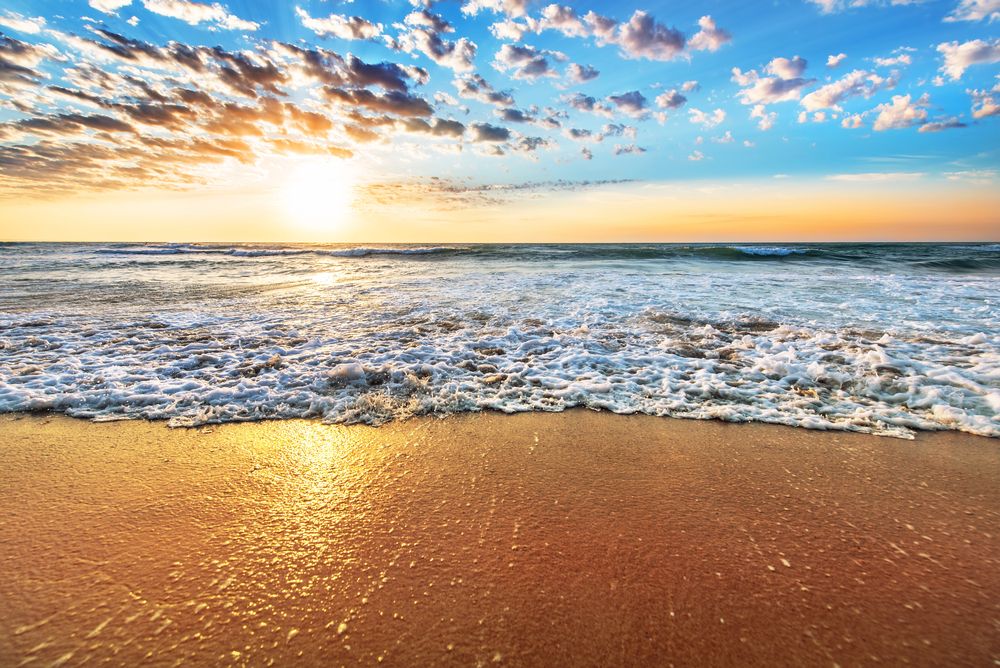
Byron Bay sunrise spots at a glance
| Spot | Getting there from the park | Before-dawn access and parking |
|---|---|---|
| Broken Head Beach | Right in front of the park | Open beach, no car needed |
| Three Sisters lookout, Broken Head Nature Reserve | Track starts at the Broken Head picnic area | Reserve always open. Parking $4 per vehicle per hour |
| Tallow Beach | A short drive north to Cosy Corner | Park always open. Cosy Corner parking $5 per vehicle per hour |
| Most Easterly Point and Cape Byron Lighthouse | Drive to Byron Bay, then walk up from The Pass | Lighthouse gate closed from sunset until 8am. The Pass parking $5 per vehicle per hour |
| Wategos Beach and Main Beach | About 10 to 15 minutes’ drive to Byron Bay | Council pay parking runs 9am to 6pm |
Access rules and fees are from NSW National Parks for Broken Head Nature Reserve, Walgun Cape Byron State Conservation Area and Arakwal National Park, and from Byron Shire Council. Checked 20 November 2026.
What time is sunrise in Byron Bay?
Sunrise in Byron Bay moves by about an hour across the year, and daylight saving shifts it again. The table shows first light and sunrise on the 15th of each month in 2026. First light is the start of civil twilight, when the sky begins to glow. It’s the best time to be in position.
| Month | First light | Sunrise |
|---|---|---|
| January | 5:35am | 6:01am |
| February | 6:02am | 6:27am |
| March | 6:22am | 6:45am |
| April | 5:39am | 6:03am |
| May | 5:55am | 6:20am |
| June | 6:10am | 6:36am |
| July | 6:11am | 6:37am |
| August | 5:53am | 6:17am |
| September | 5:20am | 5:44am |
| October | 5:45am | 6:09am |
| November | 5:18am | 5:44am |
| December | 5:14am | 5:41am |
Sunrise and first light times are from timeanddate, in local time, including daylight saving. Checked 20 November 2026.
NSW daylight saving starts on Sunday 4 October 2026 and ends on Sunday 4 April 2027, according to the NSW Government. When the clocks go forward, sunrise jumps about an hour later: 5:24am on 1 October 2026, but 6:09am by 15 October.
Can you watch the sunrise from Broken Head Beach?
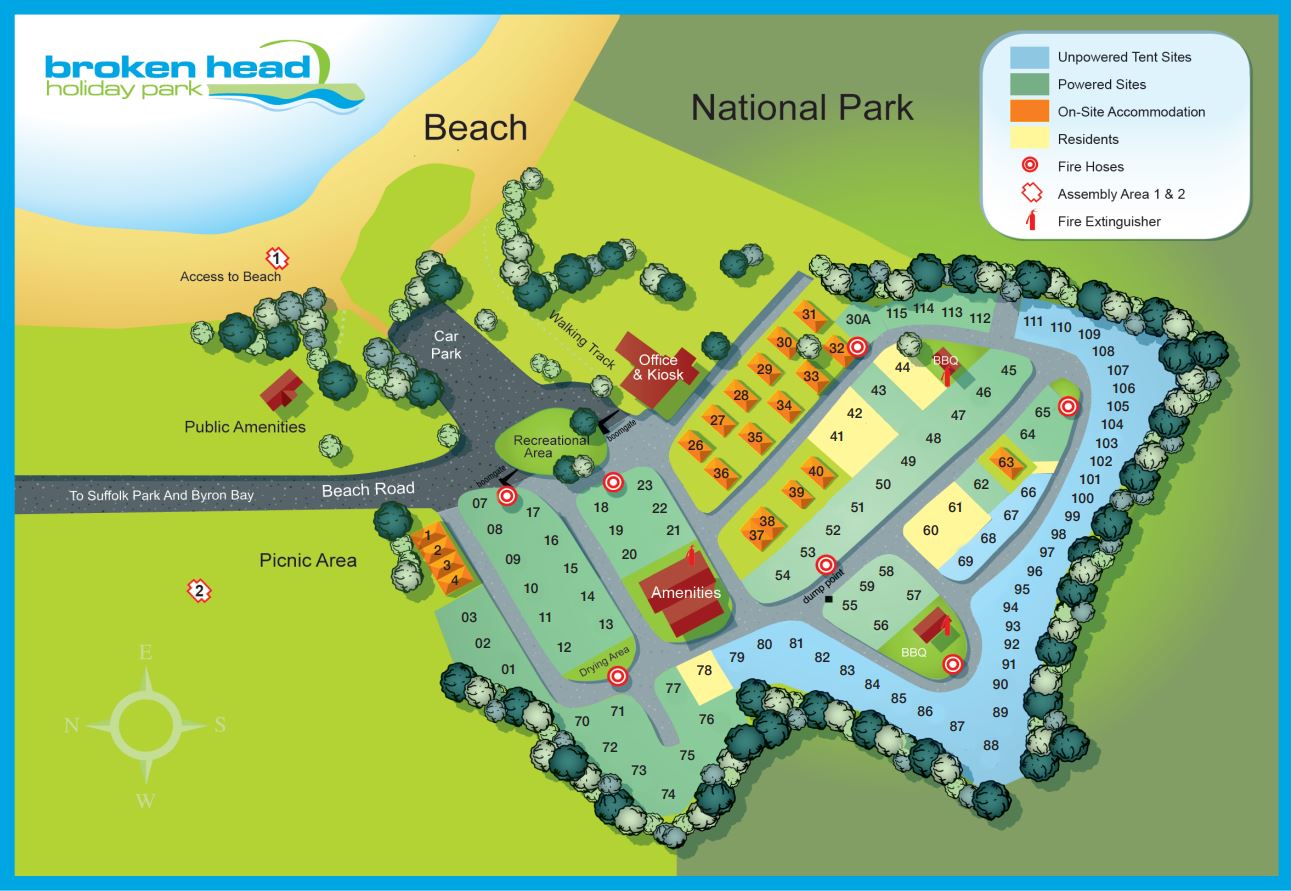
Yes, and it’s the easiest spot of all. Broken Head Beach is right in front of the park, so you can walk from your campsite, Beach Shack or cabin to the sand, with no driving or parking. A few things to know:
- Swimming: the beach isn’t patrolled at dawn. Lifeguards are on duty only from 18 December 2026 to 27 January 2027, from 9am to 5pm. Check Beachsafe before you go in.
- Neighbours: most guests are still asleep, so keep voices low.
- Coffee: fill a thermos the night before.
Which Broken Head Nature Reserve lookouts can you reach before dawn?
Broken Head Nature Reserve, on Arakwal Country, is co-managed by NSW National Parks and the Arakwal people. National Parks says the reserve is always open, but it may close in poor weather or high fire danger.
The lookout that National Parks lists in the reserve is the Three Sisters lookout, at the end of the Three Sisters Walking Track. The track is a 1.6km return walk that takes 30 to 45 minutes, and it starts at the Broken Head picnic area. Parking there costs $4 per vehicle per hour.
The track runs through rainforest, so it stays dark under the trees after the sky starts to brighten. For sunrise at the lookout, set out early with a head torch. Or watch the sunrise from the beach, then walk the track in the early light.
The lookout faces Kings Beach, which isn’t patrolled and can have strong rips.
Is Tallow Beach good for sunrise?
Yes. Tallow Beach is a long, open beach on the southern side of Cape Byron, in Arakwal National Park, which is co-managed by NSW National Parks and its traditional owners.
Use the National Parks car park at Cosy Corner, which costs $5 per vehicle per hour. National Parks says Arakwal National Park is always open, but it can close during storms or high fire danger. The beach isn’t patrolled at dawn.
Can you watch the sunrise at Cape Byron Lighthouse?
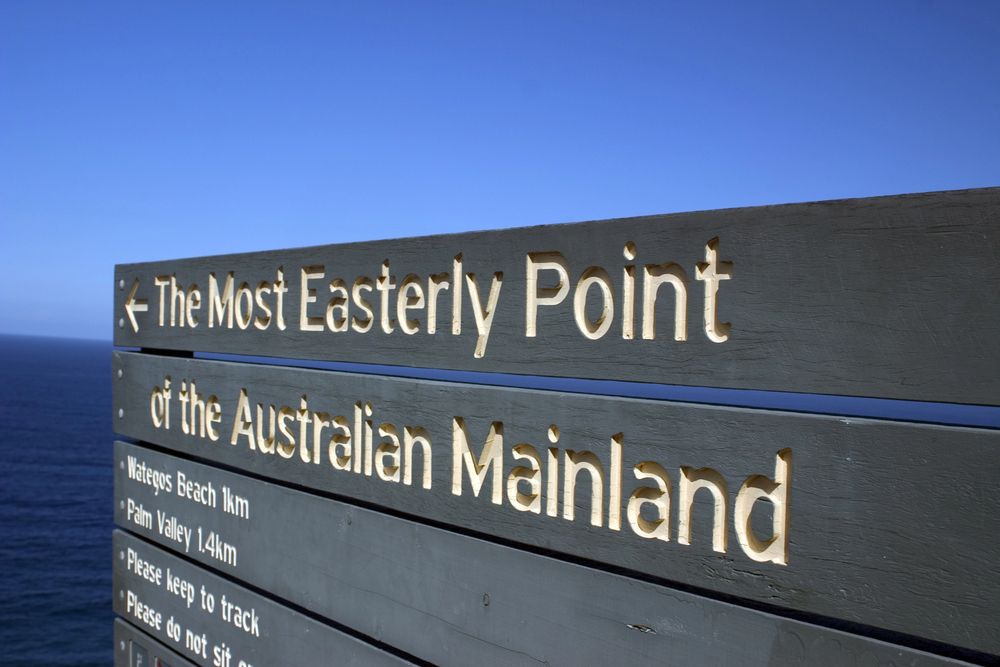
Yes, but you’ll need to walk in. National Parks describes Cape Byron Lighthouse as standing on the most easterly point of the Australian mainland. The signed Most Easterly Point is about 300m north of the lighthouse, along the Walgun Cape Byron walking track.
National Parks says the lighthouse gate is closed from sunset until 8am every day, and the lighthouse lawn is open from 8am to sunset. That means you can’t drive up to the lighthouse car park before dawn.
Instead, park at The Pass ($5 per vehicle per hour) and walk up the Walgun Cape Byron walking track. The full track is a 3.7km loop, graded hard, and National Parks suggests allowing one to three hours. It asks walkers to stick to the track and stay away from cliff edges. Allow plenty of time and take a head torch.
Some other options:
- A guided sunrise walk: National Parks lists a guided sunrise tour to the lighthouse with Wander Byron, a licensed operator. Guides meet you at The Pass car park about an hour before dawn. Bookings are required.
- Early access: National Parks says opening before 8am can be arranged with prior notice for events or disabled access. Call the Byron Bay office on 02 6639 8300 during business hours.
- Stay for breakfast: once the gate opens at 8am, parking at the lighthouse costs $10 per vehicle per hour, with a maximum of one hour per vehicle per day.
Our Cape Byron Lighthouse guide has more on the lighthouse, the museum and the full walk.
What about Wategos Beach and Main Beach?
Wategos Beach is on the Walgun Cape Byron walking track, so it’s a good place to start or finish a sunrise walk. Council pay parking applies at Wategos.
Main Beach is right in the Byron Bay town centre, about 10 to 15 minutes’ drive from the park. Council has a 95-space car park at Main Beach.
Council pay parking in Byron Bay runs from 9am to 6pm, seven days a week, so check the signs if you’re staying on past 9am.
How do you get there safely in the dark?
A little planning makes a pre-dawn outing easy:
- Light: take a head torch with fresh batteries.
- Tracks: stay on marked tracks, keep well back from cliff edges, and watch your footing on wet rocks and steps.
- Water: don’t swim in the dark or at unpatrolled beaches, and keep off rock platforms when there’s a swell.
- Roads: drive slowly, as wildlife is often on the roads around dawn.
- Alerts: check the National Parks alerts and the weather the night before, as parks can close in poor weather or high fire danger.
- Parking: each site or cabin at the park has one parking space, so plan your early drive around one car.
Tips from our team
- Ask the afternoon before: reception is open 8am–4:30pm, so if you’re planning a pre-dawn drive, ask us about leaving early by 4:30pm the day before.
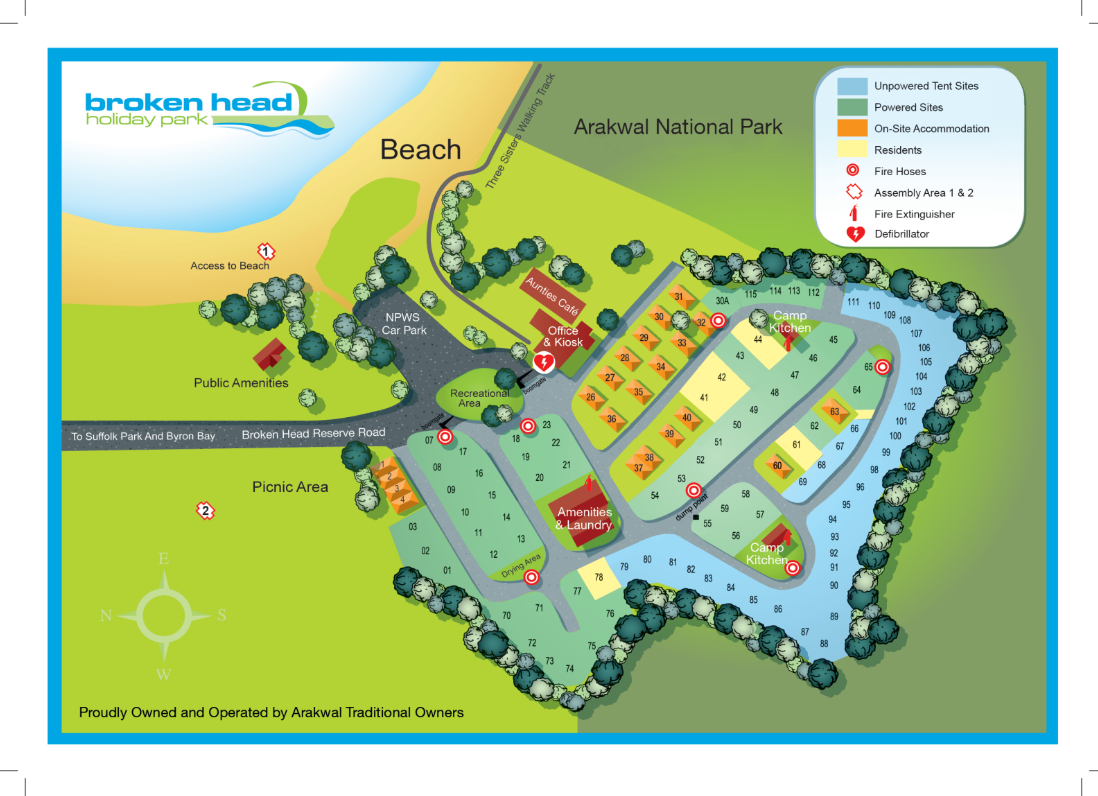
- Stay on the sand: if you’d rather not drive in the dark, Broken Head Beach is a stone’s throw from your door and has views all the way to the lighthouse.
- Breakfast with a view: back at the park, the camp kitchen has a hot water urn, a toaster and a breakfast bar with ocean views.
- Coffee after the cape: The Pass Café is on the way to or from the lighthouse, so it’s handy after a sunrise walk from The Pass. Check its hours before you go.
What should you bring?
- A head torch and a warm layer, as early mornings can be cool, especially in winter.
- A thermos of tea or coffee, water and a snack. Spar Suffolk Park (3/3 Clifford St, Suffolk Park) is open 7am–8pm daily, so stock up the day before.
- A card or phone for the parking machines.
- Binoculars for whale watching in season.
- A camera or phone, plus a small tripod if you have one.
- Something to sit on, and a bag to take your rubbish home.
Can you see whales at sunrise?
Often, in season. National Parks says the whale migration runs from May to November, and calm early mornings are a lovely time to watch for blows.
National Parks reports regular sightings of humpback whales, dolphins and turtles from Cape Byron. It also describes the Three Sisters lookout as a fantastic vantage point for spotting migrating whales in winter and spring. Sightings are never guaranteed, so take binoculars and be patient.
Our free whale watching guide has more spots, and our wildlife guide covers dolphins, birds and more.
How do you photograph a Byron Bay sunrise?
You don’t need fancy gear for a good sunrise photo:
- Arrive at first light: the best colour often comes in the 20 to 30 minutes before the sun appears.
- Know where the sun will rise: according to timeanddate, the sun rises in the east-southeast in December and January, and in the east-northeast in June and July.
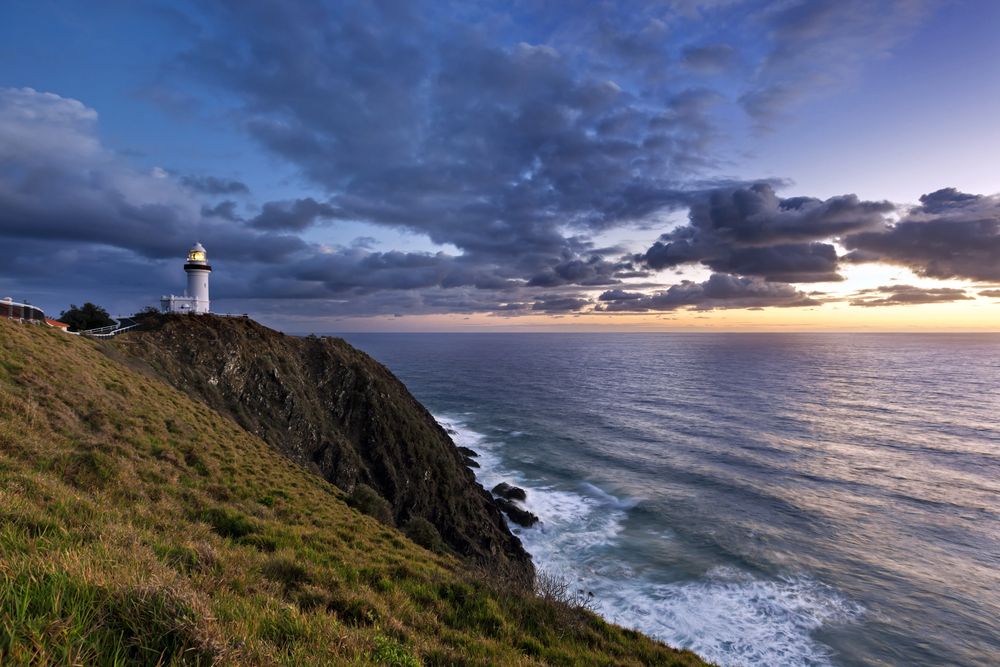
- Add a foreground: rocks, wet sand, a curling wave or the lighthouse add interest below the sky.
- Expose for the sky: on a phone, tap the bright part of the sky to lock exposure.
- Keep steady: use a tripod or rest your phone on a rock or rail in low light.
How do you respect the reserve at sunrise?
Help look after these special places:
- Country: Broken Head Nature Reserve is on Arakwal Country. National Parks notes that the rock formations seen from the Three Sisters lookout tell an Aboriginal story.
- Tracks: stay on marked tracks to protect plants and dunes.
- Rubbish: take everything you bring back out with you.
- Pets: pets generally aren’t allowed in NSW national parks and reserves, or at the holiday park.
- Drones: National Parks says you need approval to launch, land or operate a drone in a national park, so apply at least 10 days ahead.
- Noise: keep voices low for wildlife and sleeping neighbours.
- Fires: fires aren’t permitted at the park.
Byron Bay sunrise: quick answers
What time is sunrise in Byron Bay? According to timeanddate, sunrise in Byron Bay ranges from about 5:41am in mid-December to about 6:37am in mid-July. Daylight saving starts on 4 October 2026, which moves sunrise about an hour later on the clock. First light comes about 25 minutes before sunrise.
Can you drive to Cape Byron Lighthouse for sunrise? No. NSW National Parks says the Cape Byron Lighthouse gate is closed from sunset until 8am daily. To watch the sunrise in Byron Bay from the cape, park at The Pass and walk up the Walgun Cape Byron walking track, or book a guided sunrise walk.
Is Cape Byron the most easterly point of Australia? NSW National Parks describes Cape Byron Lighthouse as standing on the most easterly point of the Australian mainland. The signed Most Easterly Point is about 300m north of the lighthouse, on the walking track, and you can walk there before dawn from The Pass.
Can you watch the sunrise from Broken Head Holiday Park? Yes. Broken Head Holiday Park is right behind Broken Head Beach, so you can walk from your site or cabin to the sand to watch the sunrise. The beach isn’t patrolled at dawn, so enjoy the view and save your swim for later.
When can you see whales at sunrise in Byron Bay? NSW National Parks says the whale migration runs from May to November. Around Byron Bay, Cape Byron and the Three Sisters lookout near Broken Head Holiday Park are good vantage points, and calm early mornings can make blows easier to spot.
Book your sunrise stay at Broken Head
Broken Head Holiday Park is about 7km south of Byron Bay, between Broken Head Beach and Broken Head Nature Reserve. It’s an easy base for early risers, with the sunrise a short walk from your door and Cape Byron a short drive away.
Check availability and book your cabin or Beach Shack, call us on 02 6685 3245 to book a campsite, or see our special deals.



This Post Has 0 Comments