





Byron Bay Whale Watching: The Great Lie & Why The Best Views Are Free

The Great Byron Bay Whale Watching Lie: Why the Best Views are Free (and Not on a Boat)
Forget everything you think you know about whale watching in Byron Bay.
Seriously. Tear up the brochures, close the 25 browser tabs advertising “unforgettable” boat tours, and ignore the advice that says you need to spend a small fortune to get a front-row seat to nature’s greatest show.
After living on this coastline and watching thousands of visitors follow the same script, I can tell you this: the most common approach to whale watching is a high-cost gamble that often ends in disappointment. Every year, I see families hand over $400+ for a crowded boat, only to spend two hours feeling green with seasickness, jostling for a view, and getting a fleeting glimpse of a distant tail slap.
They come back feeling like they’ve ticked a box, but missed the magic.
The local secret? The most profound, breathtaking, and personal whale encounters happen with your feet planted firmly on the ground. They are completely free. And they don’t require a schedule, a ticket, or a life jacket.
This isn’t just another guide listing lookouts. This is a strategic plan to debunk the tourist trap and give you a far superior experience—one that connects you to the deep, ancient rhythm of this coastline. For thousands of years, the traditional custodians, the Arakwal people, have witnessed the great migration of ‘Yalingbila’ (humpback whales) along these shores. Watching from the headlands of their Country, you are sharing in a sacred tradition, not just a tourist activity.
Let’s stop doing Byron like everyone else and give you the memory you’re actually searching for.
The Tourist Trap: Deconstructing the Boat Tour Illusion
The Byron Bay whale watching industry is built on a powerful suggestion: that closer is always better. To get truly close, they say, you need a boat. It’s a compelling story, but it conveniently leaves out the uncomfortable realities.
- The Financial Cost: Let’s be blunt. An average tour costs between $119 and $139 per adult. For a family of four, you’re looking at an outlay of over $450 before you’ve even bought a coffee. That’s a significant chunk of your holiday budget spent on a single, two-hour activity.
- The Physical Gamble: The “Humpback Highway” can be a bumpy ride. Seasickness is the great unspoken spoiler of many whale watching trips. There’s nothing worse than paying a premium price to feel miserable, unable to lift your head to see the very thing you paid for.
- The Experience Deficit: You are on someone else’s schedule. You share the deck with dozens of other people, all craning for the same photo. The experience can feel rushed, impersonal, and dictated by the clock. The profound sense of peace you were hoping for is often replaced by the buzz of a crowd and the drone of an engine.
The conventional approach promises proximity but often fails to deliver on the deeper human need: a genuine, unhurried connection with the wild.
The Insider’s Alternative: The Broken Head Pilgrimage
Now, imagine this instead.
You wake before dawn, not to an alarm set for a tour check-in, but to the gentle sounds of nature. You pour a hot drink into a thermos, grab a blanket, and take a short, peaceful walk through the bush. In minutes, you emerge onto a quiet headland. The sky is turning from deep indigo to soft pastel pink. The only sounds are the waves crashing below and the birds waking in the trees.


You find your spot, settle in, and wait. And then you see it. First, the distant puff of a blow, hanging in the cool morning air. Then, a dark shape rises from the deep—a full, spectacular breach, silhouetted against the rising sun. There’s no engine noise, no announcer, no jostling elbows. Just you, the vast ocean, and the raw power of the Yalingbila.
This isn’t a tour; it’s a pilgrimage. And the epicentre of this experience is Broken Head.
While most visitors flock to the Cape Byron Lighthouse—often cited as the best lookout for whales in Byron Bay—locals know that the network of trails in the Broken Head Nature Reserve offers a more intimate and serene theatre. You get the same panoramic views of the Humpback Highway, but without the battle for a car park or a spot on the railing.
Your Blueprint for a Perfect Shore-Based Sighting
Following the crowd gets you a crowded experience. Following a plan gets you a memory that will last a lifetime. Here is the step-by-step insider’s method.
Step 1: Establish Your Strategic Home Base
This is the single most important decision you’ll make. The reason this superior experience eludes most visitors is logistics. Trying to drive to a headland for sunrise from a hotel in the middle of town is a recipe for stress—traffic, finding parking in the dark, and rushing.
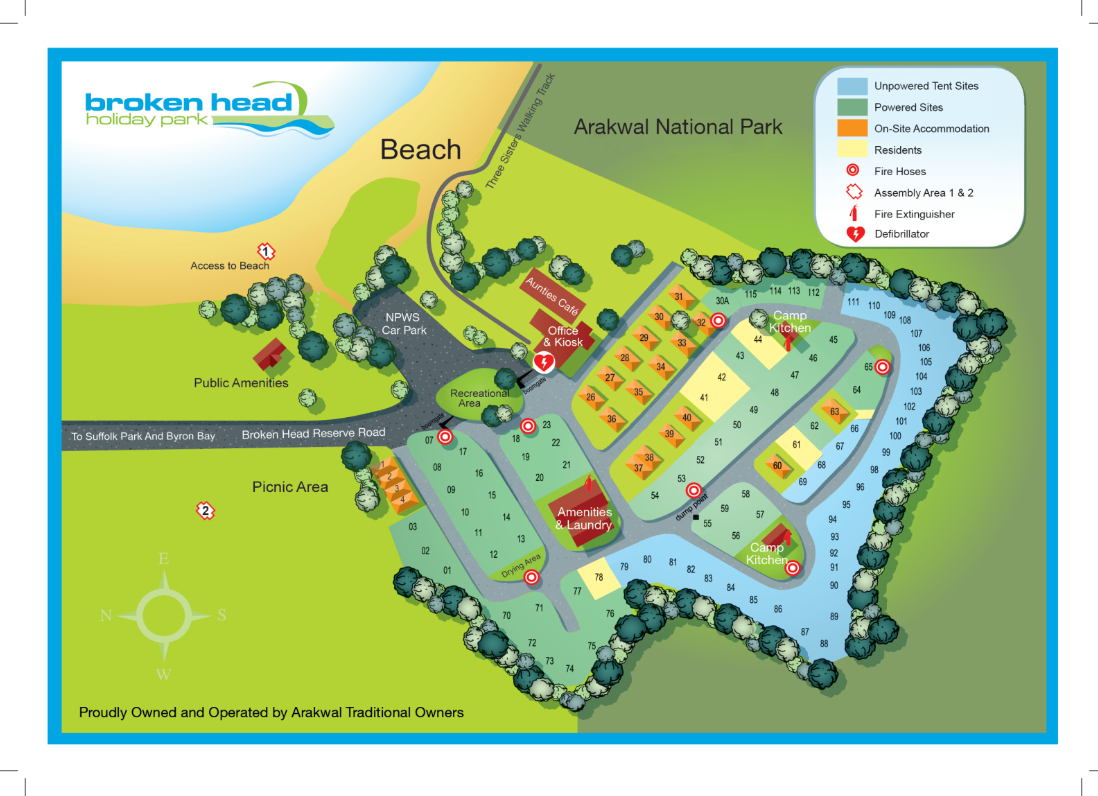
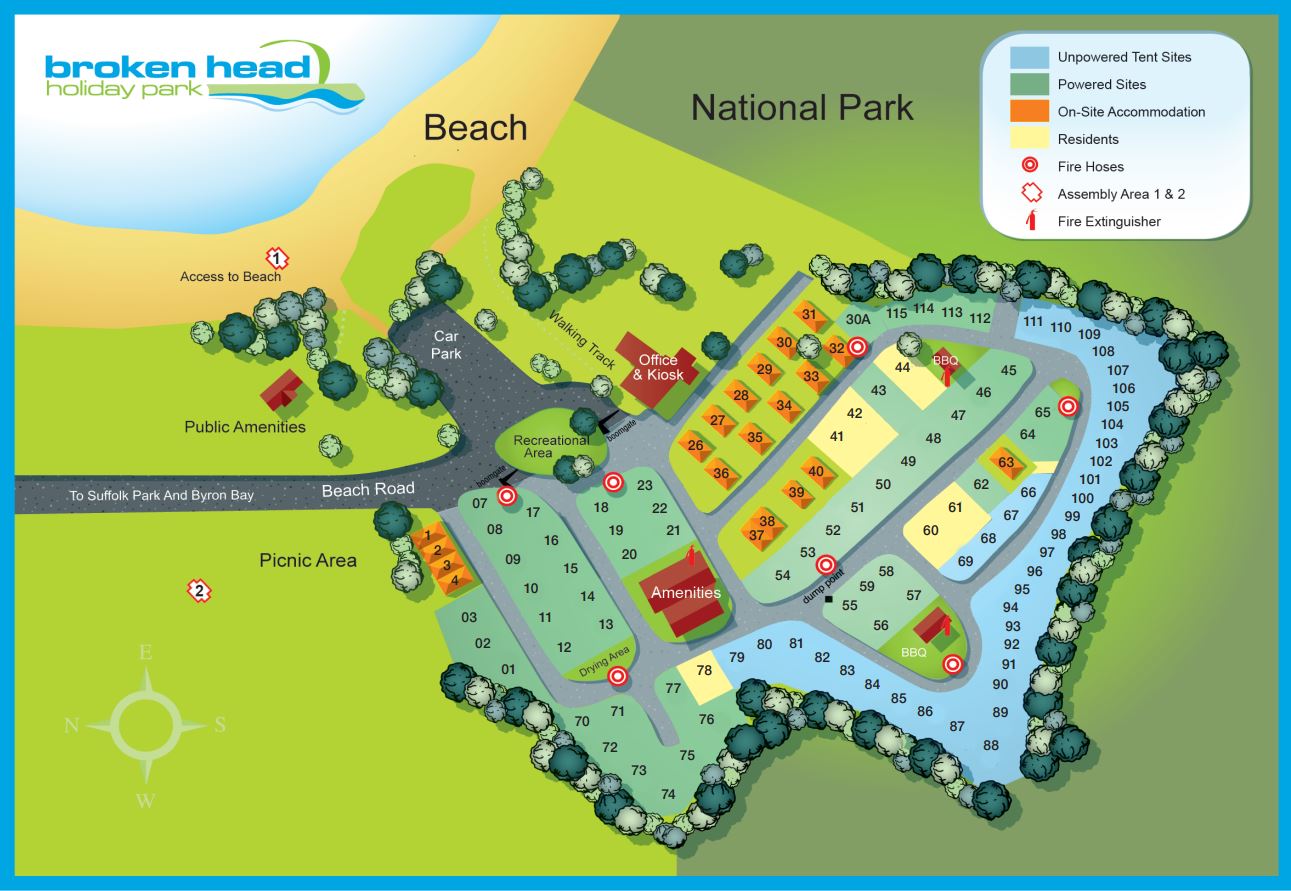
The solution is to eliminate the travel. Broken Head Holiday Park isn’t just accommodation; it is the strategic launchpad for the best whale watching in the region. By staying here, you are literally camping next to the theatre. The Three Sisters walking track, with its stunning clifftop lookouts, starts right on your doorstep.
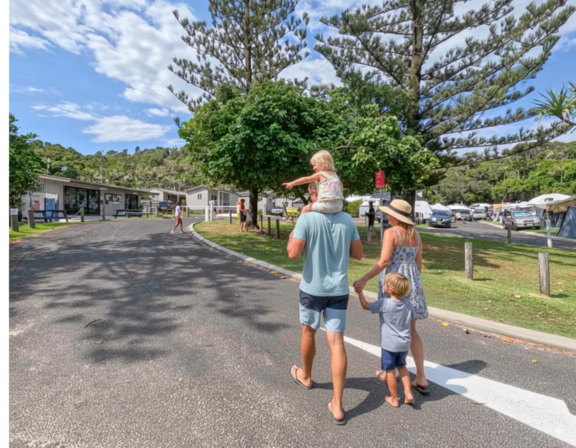

Value Amplification: Think about the $450 you didn’t spend on that family boat tour. That money now covers several nights of your stay. You’ve traded a single, two-hour gamble for the freedom to watch whales every single sunrise and sunset of your holiday, stress-free. You can pop out for 30 minutes with your morning coffee or settle in for a two-hour vigil. The flexibility is absolute.
Step 2: Master the Art of Timing
Whales migrate from May to November, but the peak season for sightings from shore is June through to early October.
- Northbound (June – August): You’ll see energetic males showing off, with plenty of breaching and competitive behaviour.
- Southbound (September – October): This is arguably the most special time. Mothers travel slowly with their newborn calves, keeping them close to the coastline for protection. The pace is gentler, and the sight of a calf learning to breach is unforgettable.
The Golden Hours: The best time of day is almost always sunrise and sunset. The low, angled light makes the whales’ blows and breaches dramatically visible. The ocean is often calmer, and most importantly, the headlands are quiet. You’ll be sharing the view with a handful of locals, not a busload of tourists.
Step 3: Pack Your “Insider” Whale Watching Kit
You don’t need much, but the right gear transforms the experience from just “looking” to a comfortable, immersive session.
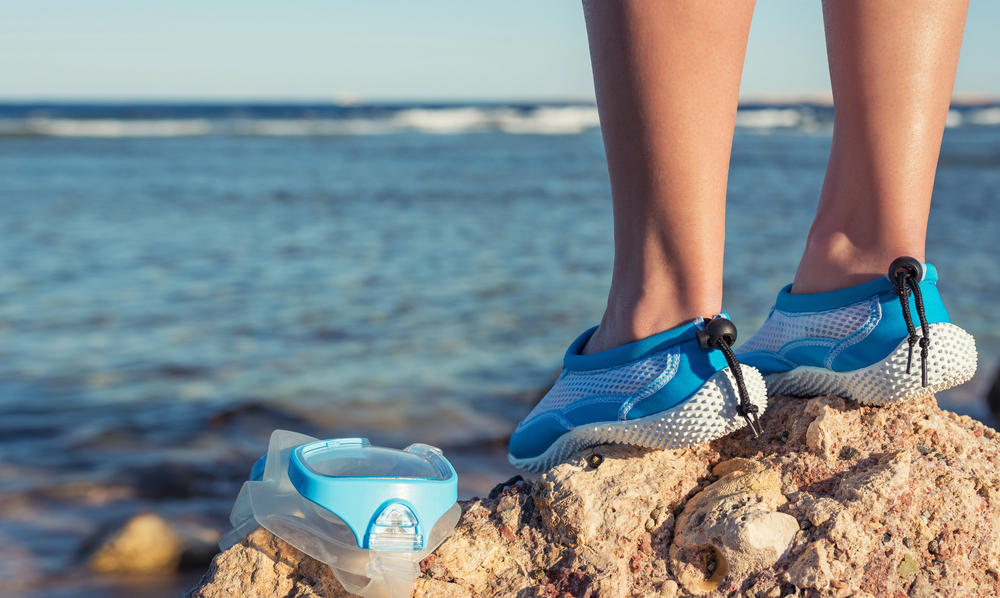

- Essential Viewing Gear: A decent pair of binoculars is non-negotiable. They are the single best investment for land-based viewing, turning a distant splash into a detailed observation.
- Creature Comforts: A thermos of hot coffee or chocolate, a warm blanket or a camping chair, and some snacks. The goal is to be so comfortable you can wait patiently.
- Protection: Even on a cool morning, the Australian sun has bite. Pack sunscreen, a hat, and sunglasses.
- Sturdy Footwear: The tracks around the headland are well-maintained but can be uneven. Good walking shoes are a must.
Step 4: Learn to Read the Water
Knowing what to look for changes everything. Scan the horizon slowly and patiently. Don’t just look for a whole whale—that’s rare. Instead, search for the signs:
- The Blow: The most common sign. It looks like a puff of white smoke on the horizon. Where there’s one blow, there are usually more to follow.
- The Breach: The holy grail. A whale launching its entire body out of the water. It’s a breathtaking display of power.
- The Slap: A pectoral fin (side fin) or tail fluke slapping the water’s surface. This is a form of communication and is incredible to watch and hear.
💡 Screenshot-Worthy Insider Tips 💡
💡 What Other Guides Won’t Tell You: A good pair of polarised sunglasses does more than protect your eyes. It cuts the glare on the water’s surface, making it dramatically easier to spot the dark shape of a whale just before it breaches. This simple gear choice gives you a critical two-second advantage to raise your binoculars or camera.
💡 What Other Guides Won’t Tell You: The wind is your friend. A day with a slight offshore breeze (blowing from land to sea) is perfect. It flattens the ocean surface, making it glassy, and it carries the sound of the whale’s breath and slaps towards you. This audio component makes the experience even more immersive.
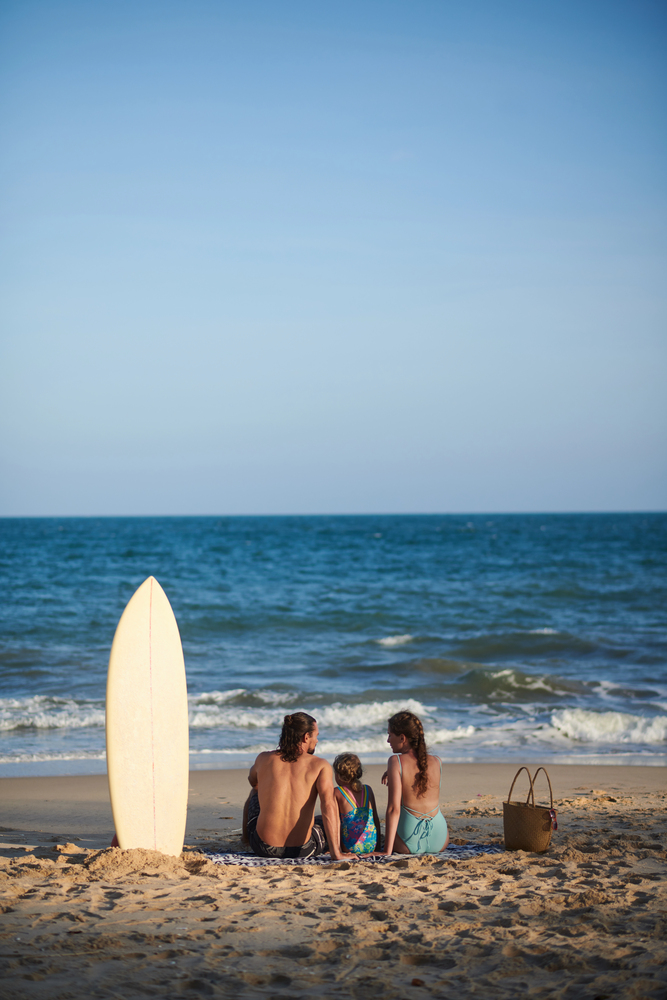

💡 What Other Guides Won’t Tell You: Don’t just focus on the horizon. Watch the behaviour of seabirds like gannets. If you see a group of birds suddenly circling and diving in one spot, it often indicates a bait ball of fish being pushed to the surface—a potential feeding ground for whales. Let the birds be your guide.
Your Questions, Answered by a Local
Is Broken Head really better than the Cape Byron Lighthouse?
For an intimate and peaceful experience, yes. The Lighthouse is iconic and a must-do, but for pure, uncrowded whale watching, the trails around Broken Head are superior. You can find your own private nook and feel like you have the ocean to yourself.
Can you really see calves from the shore?
Absolutely. During the southern migration (September/October), it’s one of the most common and treasured sightings. The mothers guide their calves in the shallower, protected waters closer to the coast, putting them right in your line of sight.
How close do the whales get to the coast?
It varies, but it’s often much closer than people realise. It’s not uncommon to see them just a few hundred metres from the headland, especially the mothers and calves. Binoculars make this distance feel insignificant.
What is the single best time of day to go?
The 30 minutes just before and after sunrise. The light is magical, the world is quiet, and the experience feels sacred. It requires an early start, but it will be the memory that defines your entire trip.
The Choice is Yours: A Transaction or a Transformation?
You can choose the Byron Bay everyone else gets. The expensive tour, the crowded deck, the ticking clock. A fine, but forgettable, transaction.
Or you can choose the Byron Bay that locals cherish. The pre-dawn walk, the quiet headland, the patient wait, and the profound, soul-stirring reward of watching these gentle giants on your own terms. It costs nothing but a little effort, and it gives you everything.
By staying at the foot of the headland and embracing this simple, powerful approach, you’re not just saving money or avoiding seasickness. You’re choosing a deeper connection. You’re transforming a tourist activity into a personal, unforgettable pilgrimage.





This Post Has 0 Comments